The Light Mobility Vehicle (LMV) programme represents a generational renewal of the UK Joint Force’s light vehicle fleet. Around 6,000 Land Rovers and 500 Pinzgauers are expected to be replaced with a single platform delivered and supported under one contract for at least twenty years.
The published requirement places emphasis on pace, affordability and right-first-time delivery, centred on a vehicle already in production and a disciplined approach to support and integration. For units that rely on light mobility in training and on operations, what matters is not only the vehicle platform, but how it remains mobile, safe and usable when deployed.
Why recovery needs to be considered early
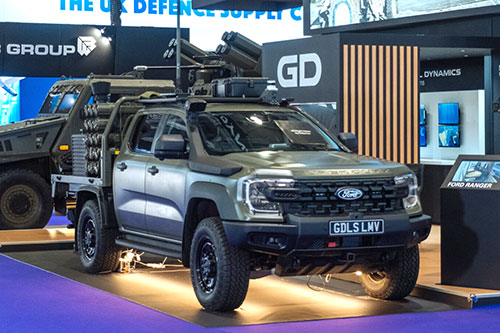
General Dynamics – Ford Ranger
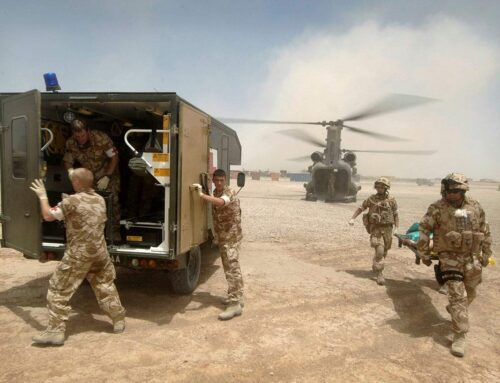
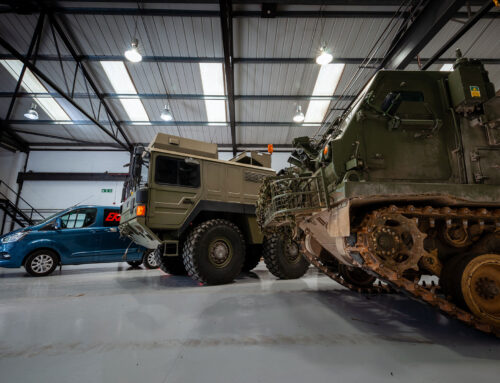
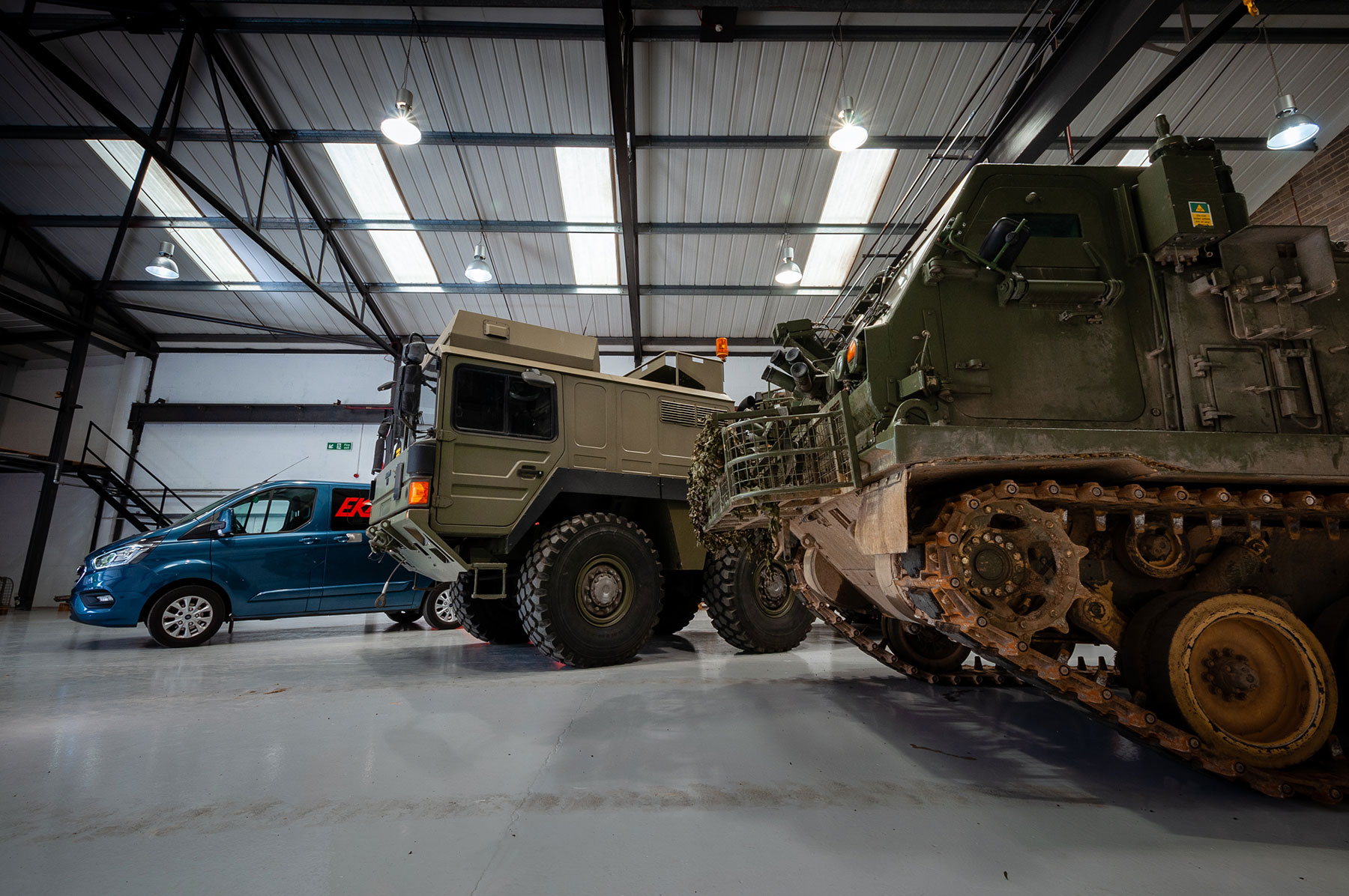
Light vehicles will break down, get damaged and become immobilised. In a combat setting, that quickly becomes more than a mechanical issue. A stranded vehicle can block movement, slow a unit’s tempo and create risk while it is recovered.
Andrew Kelly, Managing Director for EKA Limited, said: “Recovery requirements need to be considered and designed in, properly tested and evidenced early enough to remain viable once the fleet is in service.”
He added: “If towing points, recovery infrastructure and support equipment are defined and implemented too late, there is a risk that solutions become inconsistent across variants, harder to support or constrained in how they can be used.”
Decisions made late in the process become areas of compromise. Early gaps and omissions can carry through into service and leave teams working around limitations rather than relying on recovery capability that performs as intended when it is needed.
Experience across defence programmes shows recovery equipment and towing arrangements have later faced restrictions or downrating once certification evidence or operational limitations became clearer in service. The impact is practical. Recovery options can become constrained, maintainers can be forced to work around limitations and operators can lose confidence in the equipment available to them.
Why specialist suppliers matter in programmes like LMV
Programmes of this scale rely on a prime contractor to deliver the overall solution, but specialist suppliers play a critical role in supporting fleet performance, reducing risk and delivering capability.
Andrew Kelly said: “The LMV programme needs more than the base vehicle and prime contractor. Specialist suppliers play a vital role in reducing risk and supporting long-term fleet performance, and UK suppliers are by far the best organisations to support British Army equipment.”
Recovery is one of the areas where specialist input can strengthen delivery confidence from the outset, particularly where fleets are expected to remain operational and supportable over decades of service.
EKA’s role as a recovery and support capability partner

Babcock’s GLV based on the Toyota Land Cruiser
Within this context, recovery is an area where specialist expertise can make a practical difference, not by adding complexity, but by removing uncertainty early.
EKA’s support can encompass a wide range of services, depending on what a programme requires.
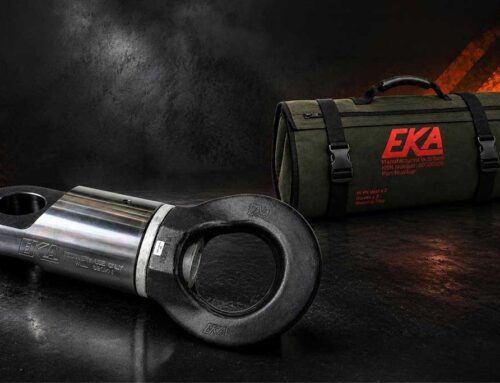
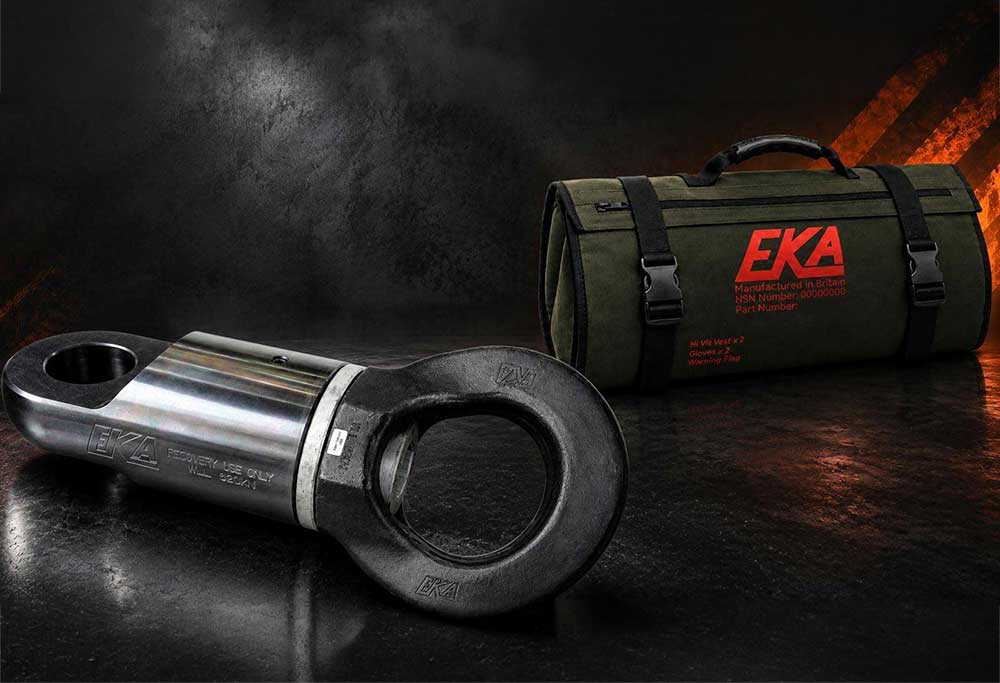
Michael Keech, CEO of EKA Group Holdings, said: “At a foundational level, we can provide a neat peer-to-peer level one recovery package, comprising of all the complete equipment schedule (CES) required to allow a driver to self-recover or, within scope, recover other LMV platforms”.
“At the next level, we can involve feasibility assessment work to help understand the recoverability implications of a proposed platform and configuration, identifying constraints early while design choices remain flexible.
“At the most integrated level, we can provide recovery system design and integration input, including defined work packages that support equipment support variants and associated recovery functionality.”
Across these levels, the focus remains the same: making sure recovery capability develops alongside the fleet rather than being treated as a late addition once key design decisions have already been made.
Keep your eye’s open for our next article where we will cover our peer-to-peer recovery package in more detail.
Supporting primes without adding complexity

Rheinmetall Light Tactical Vehicle based on the G Wagon
In prime-led programmes, responsibilities need to remain clear. The manufacturer certifies the base vehicle and the prime remains responsible for how the wider solution is delivered and assured.
Specialist partners add the most value when they work within that structure and support a recovery approach that is practical, supportable and aligned with the wider vehicle design.
Michael Keech commented: “This is where early clarity helps. If recovery provisions, towing arrangements and support equipment are specified early, there is a clearer route to consistency across variants and a clearer route to planning long-term support.”
In operational terms, that clarity supports a fleet that can be recovered efficiently and returned to service reliably.
The case for early engagement
Engaging recovery specialists early helps avoid problems that only become visible once vehicles enter service. If recovery arrangements and key components are not clearly defined, integrated and evidenced, issues can emerge later during certification or operational use.
This can lead to restrictions on how equipment is used or reductions in what it is rated to do. The knock-on effect is immediate. Operators and maintainers can face limitations and caveats that reduce efficiency, while unresolved issues can persist long into service life.
In deployed environments, the consequences are practical. If a vehicle cannot be recovered as expected, routes can be blocked, assets can be exposed and time can be lost at critical moments.
What this means for LMV delivery teams

LionStrike’s offering – Chevrolet
For organisations involved in LMV, credibility is about more than the base platform. It is also about how the fleet will be supported, recovered and kept operational throughout its service life.
Recovery is part of that picture because it affects availability, usability and confidence in the fleet once vehicles are deployed.
Michael Keech concluded: “The takeaway is straightforward. Recovery capability should be addressed early, structured clearly and aligned with the programme’s delivery model.”
He added: “By doing so, organisations can demonstrate a credible and deliverable recovery solution, with EKA supporting that confidence through to in-service support.”